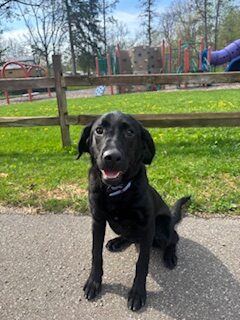
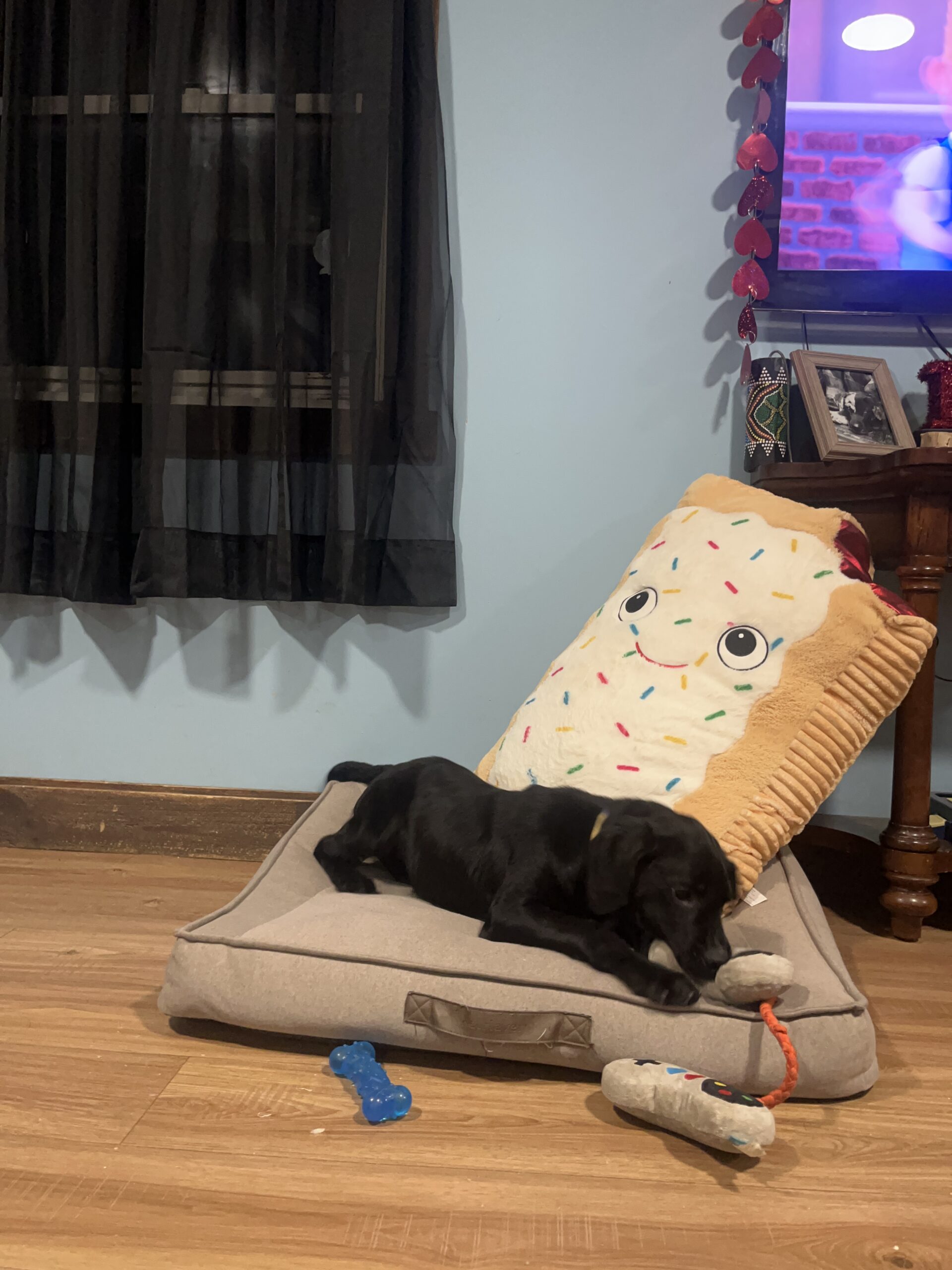
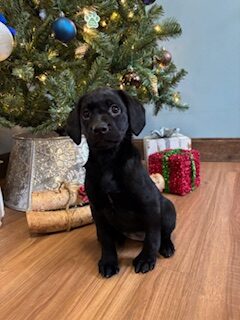
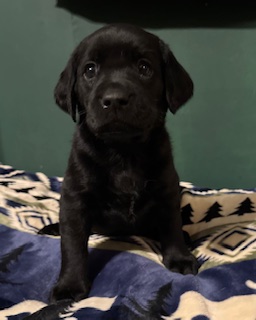
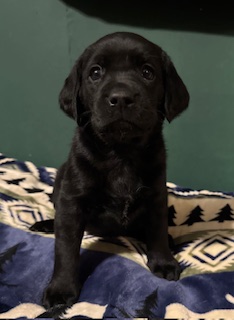
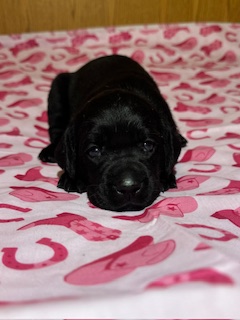
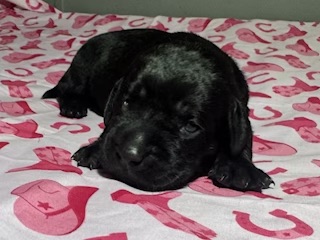
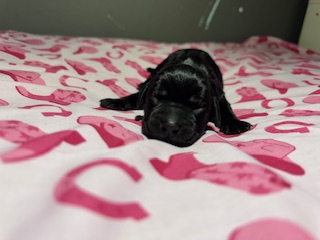
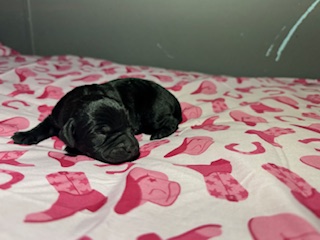
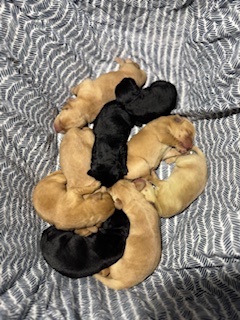
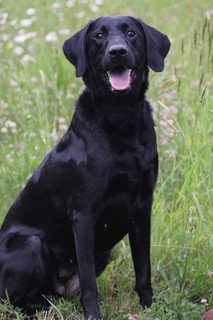

Classic dog " Grace Nardozzi " Sold
Sire: FTCH Arcklebear Caribou " Ted"
( OFTW Cynhinfa Jarmen of Wauniago x FTCH The Windbreak Whisperer of Arcklbear )
BVA Hips: 0/1 , BVA Elbows : 0 , Eyes : certified
Dam Sundance's Bon Bon CGC " Bonnie"
(FTW Apollobay Crimson King x Grayhavens Nevermore SH)
OFA Hips: Good OFA Elbows : Normal, OFA Eyes: Certified
Pennhip Right DI: 0.47, Pennhip Left DI:0.47
Pedigree
EIC,CNM, DM,HNPK,PRA-PRCD,PRCD,DRD1 ,OSD1, RD/ OSD,SD2 and STGD1: Unaffected
DOB: October 14th, 2025
Black Female
To be trained as: Advanced Companion
Go home date: end of May 2026
Notes from the Trainer: Rachael
Grace is excelling in her skillsets here, heel, sit, crate, place, and down. She is such a sweetie I love working with Grace. We have been going on field trips to pet friendly stores and finetuing Grace in preperation for her to go home.
What is your dog eating, How Much, and When?
When your dog goes home he/ she will be eating around 3 cups of food a day ( if your dog is eating a different amount, we will go over this at pick up) It's important to know that this amount will change during your dog's lifetime. You will need to feed more or less as your dog gets older, based on their activity needs.
We normally feed in the morning around 7:30 am.
Under a year old: Nutri Source Large Breed Puppy
Over a year old: Nutri Source Adult Chicken and Rice
* Available at Tractor Supply ( online), Chewy and Amazon.
* While in training your dog may be eating : Chicken & Rice, Beef & Rice , Trout & Rice etc. Please check to see what formula your dog is currently enjoying prior to pick up
What does your dog need to have at home ? Est. Crate, ID Collars and training Collars Size...
Medium to Large Ruff Land Crate ( Please see our Recommendations page )
Collars and leashes that your dog is exposed to and uses during training :
17 inch ID collar , with six foot clip on leash
22-24 inch training collar
17-20 inch martingale
Six foot slip lead
Regular store bought " training clicker" ( we prefer the ones with the wrist strap)
Acme 211.5 dog whistle
* We don't normally use gentle leaders but they can be exposed / trained with on request.
Information for Weekend or Overnight Visits:
If you are coming to pick up your dog for a vacation ( day trip, overnight, or weekend ), we will supply your dog with everything he/ she will need.
This includes: a dog crate, food bowls, toys, food, leash / ID collar, and treats.
Our address for your GPS is 8282 Crane Road, Cranesville, Pa 16410
By appointment only: Pickup times are Monday-Friday, 1 pm -3 pm. Overview and client training are included during pickup.
Drop off times are Monday-Friday 9 am -2:30 pm and Saturday 9 am -12pm.
We are closed on Sundays and Holidays. Please plan accordingly.
The Farmhouse at Willow Preserve, located at Sundance, offers limited overnight and weekend stays. Please call or text Sheryl at 814-790-2643 for availability.
Conneaut Creek Outfitters Pet-friendly Lodge and walking trails. Please call or text Sheryl at 814-790-2643 for availability.
Nearby dog friendly places to stay
Transportion Services and in person pick up
If you are picking up your pup in person, please get in touch with Sheryl to schedule your go-home date.
Our hours for pick up are Monday - Friday, 1-3 pm, and Sat, 9 am -12 pm. Includes paperwork overview and handler training at pick up.
If you are sending a Transport Service, please share Sheryl's cell phone number, 814-790-2643, for contact information.
Transport Service pick-up hours are:
8 am - 7 pm Monday - Saturday
Winter hours: 9 am -6 pm, seven days a week
Contact information for the transport companies we have used and recommend.
Please contact them directly for quotes or if you have any questions about the services they offer.
* Sundance Transport: In-house transport and training upon delivery. Please call Sheryl at 814-790-2643.
* Executive Pet Transport : (678) 975-2518
*Royal Rides: Kassie Wilson 1-806-759-8452,
*Lyons Pet Transport ( International) +1 (905) 320-0558
*Astrapi Pet Transport ( International): 438-969-9111
Transport Services that we do not recommend are:
* Coble's Cross Country Pet Transport
* Blue Collar Transport
Your Dog's Favorite's Are:
Regular Treats: Pupperoni, Zukes Training Treats, Biscuits
High Value Treats : Chicken , bacon and cheese
Favorite Toys: Tennis Balls, Kongs, soft frisbee, bumpers, stuffed squeaky toys
Favorite Bones: Mika and Sammy's bones, any Antler chews
Preferred Petting: Ears, Belly and Back
Recommended Reading Materials and Videos
Instructional videos for Head Start, Companion and Gun Dogs
From Messy to Marvelous : Crate training and Housebreaking By Sheryl Sundean
15 Day guide for welcoming your new Companion home
The New Knowledge of Dog Behavior ~ By Clarence Pfaffenberger
Genetics and the Social Behavior of the Dog ~ By John Paul Scott and John L Fuller
The Dog's Mind ~ By Bruce Fogle
K-9 Complete Care: A manual for physically and mentally healthy working dogs. ~ By Resi Gerritsen and Rudd Haak
Animals In Translation~ Temple Grandin
What It's Like To Be a Dog and Other Adventures in Animal Neuroscience ~ by Gregory Berns
The Culture Clash ~ By Jean Donaldson
The Ethical Dog Trainer ~ by Jim Barry
Don't Shoot the Dog! The New Art of Teaching and Training ~By Karen Pryor
Hear Them Speak ~ by Babette De Jongh
Training Retrievers to Handle ~ by DL and Ann Walters
Retriever Training for the Duck Hunter ~ By Robert Milner
* The books listed below are older and were, at one time, a commonly accepted dog training methodology. Some training techniques practiced /discussed in these books are not condoned or used, and language may be offensive. Like all books/discussions, there is fascinating, valuable, and interesting information to learn, even if you don't agree with the whole book *
The Koehler Method of Dog Training ~ By Koehler
Retriever Hunt Test ~ By James Spencer
Training Retrievers: The Cotten Pershall Method~ By Bobby N. George Jr.
Dog breaking, The most expeditious, certain, and easy method, whether great excellence or only mediocrity be required, with odds and ends for those who love the dog and gun. By Hutchinson, W. N. written in 1848
Cynegeticus: On Hunting With Dogs By Xenophon , written in 470 BC
Flea, Tick, Heart Worm Prevention and Vaccination Information :
Prevention care is given on the first of each month.
We primarily use Revolution, Frontline, Sentinel, Seresto Collars, and Heartguard.
Please check with your veterinarian for recommended products for your area.
Training schedule and outline: The purpose of the training outline is to help our clients better understand what their puppy is learning and why each phase is important.
Pictures or Videos of training will be linked to Cue or Example Videos in tan color below:
Newborn - One month old:
Starting on Day 3, going till Day 16, performed once a day, the pups will start Early Neurological Stimulation
The US Military developed this method, designed to improve the performance of future military working dogs, according to the Breeding Better Dogs program developed by Dr. Carmen Battaglia, esteemed breeder, judge, seminar presenter, and AKC board member.
ENS requires handling the puppies one at a time while performing a series of five exercises. Listed in order of preference, the handler starts with one pup and stimulates it using each of the five exercises. The handler completes the series from beginning to end before starting with the next pup.
1 .Tactile stimulation - holding the pup in one hand, the handler gently stimulates (tickles) the pup between the toes on any one foot using a Q-tip. It is not necessary to see that the pup is feeling the tickle. Time of stimulation 3-5 seconds.
2. Head held erect - using both hands, the pup is held perpendicular to the ground, (straight up), so that its head is directly above its tail. This is an upwards position. Time of stimulation 3 - 5 seconds.
3. Head pointed down - holding the pup firmly with both hands the head is reversed and is pointed downward so that it is pointing towards the ground. Time of stimulation 3 - 5 seconds.
4. Supine position - hold the pup so that its back is resting in the palm of both hands with its muzzle facing the ceiling. The pup while on its back is allowed to sleep. Time of stimulation 3 - 5 seconds.
5.. Thermal stimulation - use a damp towel that has been cooled in a refrigerator for at least five minutes. Place the pup on the towel, feet down. Do not restrain it from moving. Time of stimulation 3 - 5 seconds.
At two weeks old, the litter's eyes and ears are opening, and they are becoming more mobile. This is also when the litter will have their nails clipped for the first time.
Week 3 -4: Your pup is 3-4 weeks old and is starting to eat blended puppy food, which begins the weaning process from their mother. This is when we introduce the food whistle. What is the “food whistle” The “food whistle” is a training tool that pairs a distinct whistle sound with positive reinforcement to establish a reliable recall command.
Why do we do it? Teaching a puppy the whistle at that age is particularly effective because puppies at this age have heightened auditory perception and are highly receptive to forming associations. Early training helps solidify the connection between the whistle and the reward, creating a deeply ingrained response. This early conditioning ensures the puppy will respond promptly to the whistle, even in distracting environments, enhancing their safety and control as they grow.
Two Months Old
Five - six weeks old :Your pup is enjoying exploring the reception room with littermates. Going out on short outdoor walks, weather depending, exploring mud, puddles, snow, and grass. This age is also when we lightly introduce Sit lessons
We start introducing the “sit” cue at roughly 6-7 weeks of age in a familiar, low-distraction area.
We do this by using food to lure them back into a sitting position and using our clickers to mark the desired action. With enough consistent repetition, our puppies start to have this down within 3 to 4 training sessions. We then maintain this by cueing them to sit whenever we stop walking, when they come in or out of doors, and before they eat.
The “sit” command is the most important command. It's the gateway to all of the other commands. It teaches self-control and focus.
7-8 weeks old: At eight weeks old, your pup is now old enough for weekend vacations. Please contact Sheryl to schedule your first visit.
Your pup is continuing to work on sit lessons. We are also introducing eye contact and settling.
Why is it important? Eye contact while working with a dog is crucial because that’s how you connect and communicate. Just like with people, it shows that they’re engaged and paying attention to you. If your dog isn't looking at you, they're probably not listening to you. They’re not communicating with you. Teaching them to look to you for direction makes the learning process much easier and can be important for your dog's safety in emergency situations. It also teaches them how to settle and be ready for their next command.
How do you teach and maintain that? The process of teaching eye contact is simple and a rather fun exercise that can be maintained at all life stages. We start this after they learn the “sit” command. Once they know sit, we start clicking when they look at us. We use a verbal “Look” command, and then when we get the desired result, we click and then reward them for the desired behavior.
Your pup is learning intro to down. We start teaching the “down” command at roughly 8-9 weeks of age, after the pup has mastered the sit command. We do this by using treats to lure them into a down position and using our clickers to mark the desired action. With consistent repetition, our puppies develop this skill set within 3 to 4 training sessions. We maintain this by having them practice the skill set in everyday training. The Down command is important because it teaches the settle cue.
Your pup is also working on Cup Drills. Cup drills are awesome for building precision, confidence, and focus. This drill involves placing treats on top of a cup or bucket, then letting your puppy go get them. Once they get the treats, we recall them back to us and reward them with a little more treats and lots of pets. This also helps teach the concept of lining by encouraging them to focus on a specific target in a straight line, improving their ability to follow directions and stay on course during retrieves.
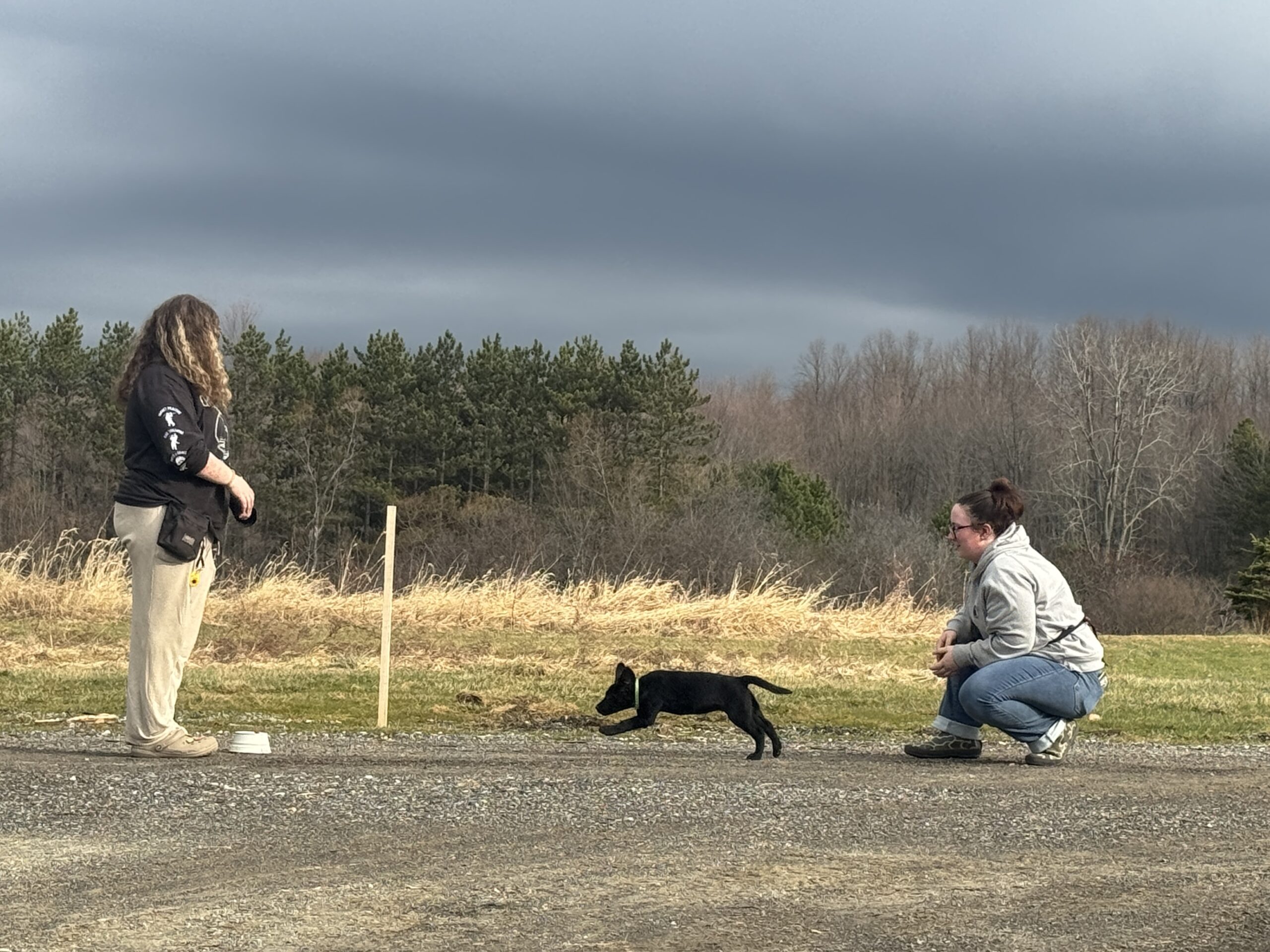
Where can you successfully cue for this skill set? In a known, low-distraction environment with high-value rewards
Your pup is now starting group walks in the fields and woods.
Why are group walks so important? Group walks are incredibly important for your puppy’s growth.
They're not just fun; they're vital to development. Introducing the ‘quartering whistle’ while continuously switching directions during your walk lays a solid foundation for their off-leash recall. This teaches pups to respond and stay connected, even when distracted. Plus, group walks are great for socializing. Puppies learn how to interact with other dogs, pick up social cues, and develop good manners in a pack setting at a young age.
During this time, we will also introduce gunfire during group walks to help desensitize puppies to loud noises in a controlled environment.
Perks include building confidence, socialization with other dogs, and acclimation to distractions, which is crucial for developing well-adjusted, steady dogs for the field, home, and city lifestyle.
Puppies associate loud sounds with positive experiences, such as being with their pack while exploring. They are typically more confident in group settings. This helps prevent fear responses and ensures they remain focused and calm during hunts and real-world experiences.
Three Months Old
Head Start Puppy Foundation
Your pup is working on Intro to Crate. At this age, they are crated and focused more on settling into the crate than on the command itself. Later on, we will come back and teach the command.
What is "crate"? This is the concept of keeping a small area clean for a set period.
Why is crate important? It provides security and comfort for your pup, helps with house training, and staying clean.
The “Crate” command is crucial for dogs because it creates a designated, safe, and comfortable spot that promotes calm, controlled behavior. Learning to be calm and quiet in the crate also supports recovery after spaying or neutering.
Your pup is working on leash drags. Leash drags are great for getting a puppy used to the feeling of a leash without any pressure or any negative connotations to a human.
It's a way to introduce them to the idea of being tethered/connected to something while having fun with their littermates.
This helps them become more comfortable and more confident in their future training sessions.

Leash drags and being comfortable on a leash are the first building blocks for teaching "Settle."
Teaching a puppy to tether and settle is the next piece and equally important because it builds patience and independence and supports impulse control. It helps prevent future unwanted behaviors and encourages them to self-settle. It improves their focus and helps them think before acting. Calm, Quiet, and Confident gets the treat...
Your pup is going on field trips to parks, pet-friendly stores, Etc. Socialization and exposure are critical for a puppy’s development as they shape its behavior and temperament.
During the sensitive period of development, typically up to 16 weeks of age, puppies are highly receptive to new experiences. Positive interactions with various people, animals, and environments help them develop into well-adjusted adults.
Early exposure ensures that puppies learn to navigate the world confidently and safely, contributing to their overall well-being.
During this month, your pup is also getting fun retrieves. What they are and why they’re important?
Fun retrieves are all about making fetching enjoyable for the pup, which is important for their development. They help build confidence, teach them to hold and return items, and strengthen the human-dog bond.
For field dogs, fun retrieves with bird wings are important because they lay the foundation for more formal training later.
When doing these with a young dog, you use two toys for the retrieves, throw the toy behind you, and stay in motion by walking away.
This encourages the pup to grab the toy (retrieve), return to you (here), and, because you have a "new cool" toy, drop the toy they have to get the new one.
By using two toys, you can quickly change their focus and avoid the ‘keep away’ game that they sometimes tend to play. This helps build a correct foundation for them at a young age.
When and where can you successfully cue for these skill sets? Working in known areas where the pup has been successful and in low-distraction environments is key at this age. Try to " cue" only when the odds of the pup making the right choice are high.
Four Months Old
Puppy Foundation intro to Companion
Your pup is starting intro to obedience.
We start with short walks in low distraction areas and focus on core commands: sit, heel, here. We work on getting the pup to walk on the left side and sit when we stop walking.
Your pup is also working on Intro to place.
What is place? Place is the concept of going to a specific area like a hammock, or dog bed and settling.
Why is place important? The “place” command is crucial for dogs because it creates a designated, comfortable spot that promotes calm, controlled behavior. It serves as an essential training tool for managing impulsivity, such as begging or jumping, and provides mental stimulation that helps dogs learn to settle and relax in a busy environment.
Your pup is working on Crate with the command “Crate.” When given the command, your pup will go into the crate. The handler will mark the action with their clicker and a treat. Your pup will then settle until told to come out.
As well as Continuing Obedience lessons here, heel, and sit.
FIve Months Old : Companion Program
Your pup is working on down. They were taught Intro to down around 8-9 weeks. Now they are working on going down when given the command and settling in a down position. We also add Down with eye contact here which is just like sit with eye contact. The pup is in a down position and given the command “look” the pup will direct their full eye contact to the handler.
Your pup is going out on individual walks in the fields and woods. Sharpening up their off-leash recall.
What is an off-leash recall? Off-leash recall is the training process of getting a dog to immediately return to you when called, even with distractions, ensuring safety and allowing freedom.
How do you teach and maintain this skillset? It relies on building a consistent, positive, and high-value reward association with a specific cue (e.g, “here” or a whistle), starting in distraction-free areas with a leash or long line to ensure success, allowing them to learn the command without the option to ignore it. Use high-value treats the dog only receives during recall to make returning more rewarding than staying away. Consistency is crucial, use the same command or whistle every time to avoid confusion. Gradually increasing distance and complexity over time. Add release instead of ending the fun every time you call your dog, occasionally recall, treat, and then release them back to play.
Your pup is working on home etiquette lessons.
What is home etiquette and why is it important? Home etiquette focuses on building polite daily habits through consistency, positive reinforcement, and structure to ensure a calm, well-behaved pet indoors. Pups are taught door manners they sit before entering and exciting through a door. Pups are also taught to settle either on a dog bed or in a crate. This is crucial for working from home or managing high-energy behavior. We work on calm greetings, the dog sits when visitors arrive. We also expose them to vacuums, brooms, cupboards shutting, TV sounds, Etc. Home etiquette is very important as you want your companion to respect your home and their new home. Home etiquette ensures calm, respectful behaviors in the home.
Six Months Old : The Companion Program
Since four weeks of age your pup has been consistently exposed to each piece of training needed to become a Companion. He or she has learned the foundation of obedience through play and rewards, cued for success and we are now in the final thirty days of the Companion program, which consists of reviewing here, heel, sit, sit/stay, place, look, Crate, off-leash recall, and going on age-appropriate longer field trips to " proof" these skill sets
Your pup is working on finalizing the following skill sets:
Sit: "Auto Sit" sits automatically when the handler stops walking. "Cued sit." Sits when cued either with a command "sit" or "sstt" or a hand gesture "hand out in front of you, pointing with your pointer finger."
Heel: The pup walks right at your thigh on your left side, watching your leg. How to maintain heel? You maintain heel by making sure your pup does not lose eye contact with your leg, and that your pup does not exceed more than 2 inches in front of your thigh.
Here: Come back to you when you say "here" or use the recall whistle.
Place: When given the command "place" your pup will go to a specific spot: their dog bed, a raised dog bed, or maybe even their crate. While they are on place they can sit or lie down or even chew on a toy, but they need to be calm, and they cannot get off until you release them. This rolls into sit/stay: the pup stays in a specific spot even with distractions around them. Now that we are at the end of the program, we demonstrate these skill sets in more high-distraction areas such as pet-friendly stores, parks, and in town.
Look: We have focused on eye contact and the "Look" command since your pup could sit. With the luring of our hands and treats. Now we take away those motions and work on giving the command "Look." Once the pup makes eye contact and holds it with the handler, then they are praised. How to maintain the skill set? You can maintain this skill set by asking your dog to "Look" at you in a calm, low-distraction area when they are not playing and then giving them a treat when they make eye contact.
Crate: Going into the crate calmly when given the command "Crate," settling in the crate for an allotted amount of time, and keeping the crate clean. How to maintain the skill set? To maintain this skill set, you will want to continue to use the crate daily.
Your pup is going out on individual walks in the fields and woods. We use these walks to review our off-leash recall and whistle cues.
What is an off-leash recall? Off-leash recall is the training process of getting a dog to immediately return to you when called, even with distractions, ensuring safety and allowing freedom.
How do you teach and maintain this skillset? It relies on building a consistent, positive, and high-value reward association with a specific cue (e.g, “here” or a whistle), starting in distraction-free areas with a leash or long line to ensure success, allowing them to learn the command without the option to ignore it. Use high-value treats the dog only receives during recall to make returning more rewarding than staying away. Consistency is crucial, use the same command or whistle every time to avoid confusion. Gradually increasing distance and complexity over time. Add release instead of ending the fun every time you call your dog, occasionally recall, treat, and then release them back to play.
Your pup is working on home etiquette lessons.
What is home etiquette and why is it important?
Home etiquette focuses on building polite daily habits through consistency, positive reinforcement, and structure to ensure a calm, well-behaved pet indoors. Pups are taught door manners; they sit before entering and exiting through a door. Pups are also taught to settle either on a dog bed or in a crate. This is crucial for working from home or managing high-energy behavior. We work on calm greetings, the dog sits when visitors arrive. We also expose them to vacuums, brooms, cupboards shutting, TV sounds, Etc. Home etiquette is very important as you want your companion to respect your home and their new home. Home etiquette ensures calm, respectful behaviors in the home.
How to maintain home etiquette? Home etiquette needs to be clear and followed from the very beginning so your pup knows how to behave in your home. If you want to allow them on the furniture with you, this will be a learned, continued behavior. If you don't want them on the furniture, don't allow it at all. If you want them calm when guests arrive and visit, put your pup on place before the guests enter. Let your pup observe guests and new things from the comfort of a place before allowing anyone to give attention to your pup. We have instilled these skill sets in your pup, but it is important for you to reinforce them so your pup respects your home.
At the end of this program, your companion is heading home in the last week of the month or continuing on to the Adv. Companion program.

Sheryl and Scott Sundean
814-790-2643
SundanceRetrievers@gmail.com
Sundance Retrievers Inc.
Kennel License #13436